History
Highlights - July / August
- Article
Two-stage risk-reducing breast surgery with a synthetic matrix: a case report
Amanda de Queiroz Germano et al. Two-stage risk-reducing breast surgery with a synthetic matrix: a case report. Mastology. 2026;36:e20260012. https://doi.org/10.29289/2594539420260012
As indications for risk-reducing mastectomy continue to expand among women with hereditary cancer syndromes, reconstructive strategies that maintain oncologic safety while improving aesthetic outcomes have become increasingly relevant.
This case report presents an innovative staged approach for patients with large, ptotic breasts, a population in whom nipple-sparing mastectomy is often technically challenging and associated with higher complication rates.
By describing the rationale, technical considerations, and early clinical outcomes of this procedure, the authors provide practical insights into an area in which evidence remains limited. The report emphasizes the importance of individualized surgical decision-making in hereditary breast cancer and supports further investigation of staged reconstructive approaches through larger prospective studies.
- Methodological Article
How to write a case report: from clinical observation to scientific report
Bessa JF. How to write a case report: from clinical observation to scientific report. Mastology. 2026;35. https://doi.org/10.29289/2594539420250060
As clinicians, we are trained to recognize unusual cases. As researchers, however, we must learn how to transform these clinical observations into scientific evidence.
In this methodological article, I explain how a well-written case report should go beyond the description of a rare event. It should convey a clear clinical message, follow a logical structure, and provide sufficient transparency for readers to critically interpret the case.
Using the CARE Guidelines as a framework, I review the essential components of a high-quality case report and adapt these recommendations to the field of mastology, illustrating them with practical examples from the literature.
Although case reports occupy the lowest level in the hierarchy of evidence, they remain invaluable for generating hypotheses, describing innovative surgical techniques, reporting unexpected outcomes, and sharing experiences involving rare clinical scenarios.
My goal is to encourage authors, particularly early-career researchers, to view scientific writing not merely as an exercise in publication, but as an opportunity to transform clinical experience into scientific knowledge.
Highlights - May / June
- New
Emeritus Editor-in-Chief
Mastology celebrates 35 years of activity. In 2026, we began a new editorial cycle, restructuring the journal’s main editorial board with the inclusion of the Editor-in-Chief Emeritus.
Professor Alfredo was unanimously selected in recognition of his scientific achievements and his outstanding contributions to the editorial development of both the journal and the field of mastology.
Colleagues who have worked closely with him summarize this contribution.
René Aloisio da Costa Vieira
Editor-in-Chief
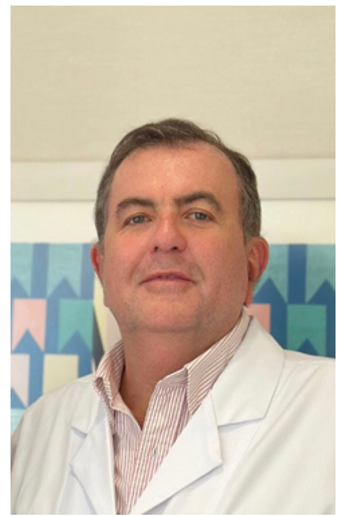
Professor Alfredo Barros: An Architect of Brazilian Mastology
Professor Alfredo Carlos Simões Dornellas de Barros is one of the most influential figures in Brazilian Mastology. A physician, educator, researcher, and institutional leader, his career is closely intertwined with the history of the speciality in Brazil, marked by decisive contributions over several decades.
From his undergraduate years at the University of São Paulo School of Medicine (FMUSP), he stood out for his academic excellence and his appreciation for human relationships, cultivating lasting friendships with classmates who would become national leaders in their fields, including José Roberto Filassi, Flávio Takaoka, and Nilson Roberto de Melo. This deep regard for people has always been a defining trait of his personal and professional life.
After his residency in Obstetrics and Gynecology at the Hospital das Clínicas of USP, he earned his doctoral degree, became an Associate Professor at FMUSP, and later a Full Professor at the University of Santo Amaro School of Medicine (UNISA). He supervised graduate students, conducted research that expanded knowledge of breast diseases, and established an Experimental Pathophysiology Laboratory.
His pioneering contributions include the introduction in Brazil of sentinel lymph node biopsy and the ROLL technique (Radioguided Occult Lesion Localization), as well as studies that established the importance of adequate surgical margins in breast-conserving treatment for breast cancer.
Institutionally, he served as President of the Brazilian Society of Mastology, leading the acquisition of the Society’s permanent headquarters in Rio de Janeiro. He worked alongside the Brazilian Medical Association (AMB) and the Federal Council of Medicine (CFM) to achieve official recognition of Mastology as a medical speciality, and served as President of the Latin American Federation of Mastology.
As the founder of the Medical Residency Program in Mastology in Brazil, his influence extended far beyond technical knowledge. I (GN) had the privilege of being one of his trainees and witnessing that, beyond teaching surgery and clinical management, he imparted values. He emphasized professional conduct, ethical behavior, empathy, and compassionate patient care. For him, treating a patient meant seeing her as a whole person, respecting her fears, expectations, and life story.
His legacy lives in the institutions he helped build, the scientific advances he promoted, and above all, in the physicians he shaped. Professor Alfredo Barros represents a generation of mentors who understood that true medical excellence arises from the union of knowledge, character, and unconditional respect for patients.
He published 217 scientific articles, associated with H-factor H10 at Web-of-Science. In addition, he was twice Editor-in-Chief of the Revista Brasileira de Mastologia (1995-1998 and 2005-2007), now Mastology. These facts qualified him to become Emeritus Editor-in-Chief and we are celebrating it.
José Roberto Filassi
Head of the Mastology Division – Department of Obstetrics and Gynecology FMUSP/ICESP
Guilherme Novita
President of the Brazilian Society of Mastology (2026-2028)
- Article
Original Article 500
Longitudinal analysis of factors influencing return to work after breast cancer treatment among public employees in São Paulo
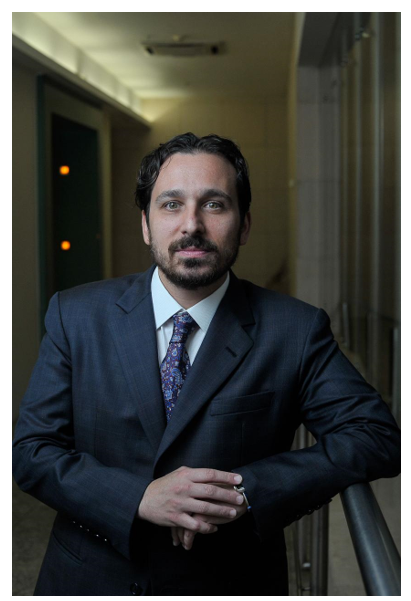
Marcelo Antonini; corresponding Author
The return to work is a complex and multifactorial issue, as it involves situations related to the patient, the disease, and the work environment. Few national studies have published experiences related to this matter. These studies were generally conducted in Public Hospitals with a population linked to the SUS (Unified Health System).
Fortunately, we are entering our 36th year of the journal. Likewise, we have reached 500 original articles with this article.
This article is a gift to our readers, given its national and global uniqueness. It highlights the factors associated with the return to work in women with breast cancer who work for the State Government of São Paulo. These patients are civil servants with stable jobs, a fact that leads to a high rate of return, as well as presenting facilitators for their return and, eventually, a change of role.
Of the 300 women evaluated, the return to work improved their quality of life, a fact that reinforces the need for the reintegration of these patients after breast cancer.
The main author is Marcelo Antonini, Mastologist, MD, PhD. He works at “Hospital do Servidor Publico Estadual do Estado de São Paulo”, a place that provided the patients for the study. He has 73 publications, having a H-factor 10 at Google Scholar and H7 at Web-of-Science. Now he is a Mastology Co-editor.
Congratulations to the authors. This article is a gift (https://mastology.org/journal/article/view/1918) to our readers.
To the readers, when discussing the topic of return to work, this should be a reference article.
René Aloisio da Costa Vieira
Editor-in-Chief Mastology
- Reviewer
Best “Mastology” reviewer: 2023-2025 triennium.
We are initiating a series dedicated to highlighting outstanding researchers and contributors to journal Mastology. In this context, we sought to identify the best peer reviewer of the past triennium. The evaluation was based on reviewer acceptance rate, number of completed reviews, and turnaround time.
Among all reviewers, mastologist André Mattar distinguished himself through his exceptional commitment and performance. It is therefore with great recognition that we present him as the Best Reviewer of the Triennium in this edition of Highlights.
René Aloisio da Costa Vieira
Editor-in-Chief Mastology
André Mattar

I first met André Mattar at the beginning of my career as a Professor in the Mastology Discipline at UNIFESP, where I was responsible for the resident physicians in the Department of Gynecology. During the annual evaluation exam preparation, I noticed that André consistently achieved the highest scores. As a result, the residents who demonstrated the greatest academic potential and interest in advancing their research skills were invited to join the postgraduate program in different areas of Gynecology. I proposed that André enter the Postgraduate Program in Mastology, incorporating him into my research group.
I held the position of Director of Pérola Byington Hospital, which I held for 17 years observing André’s progress. Thus, he quickly defended his doctoral thesis, published it with distinction in an internationally recognized journal. He actively participated, together with our colleague Jorge Shida, in the implementation of CARE (Center for Resolutive Care in Mastology), aiming to ensure access, comprehensiveness, and equity for patients within the Brazilian Public Health System.
He subsequently assumed leadership roles in the Diagnostic Sectors (non-palpable lesion diagnosis) and in the implementation of stereotactic mammotomy, while also structuring the Clinical Oncology Sector through international research protocols. He contributed significantly to the training of more than 100 Mastologists currently practicing throughout Brazil. Now he is the Head of Mastology Division – Hospital da Mulher (past Pérola Byington Hospital).
Recent international publications involving data from the Women’s Health Reference Center have highlighted the outstanding results achieved through collaborative work with fellow Mastologists.
His remarkable participation in the São Paulo and Brazilian Societies of Mastology, along with his performance in the Brazilian Journal of Mastology, reflects his moral integrity, responsibility, and unwavering commitment to improving humanized care, teaching, and research in Brazilian Mastology.”
Luiz Henrique Gebrim
Universidade Federal de São Paulo
Former Director or Pérola Byington Hospital
- International Editorial Board
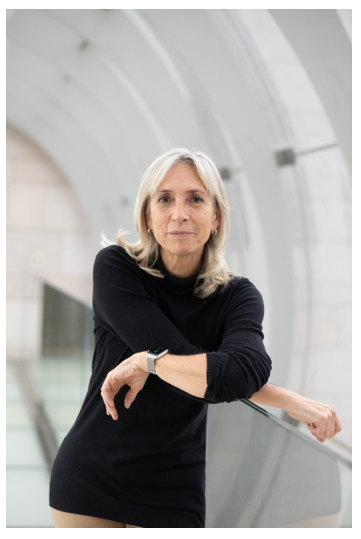
Maria João Cardoso, MD, PhD
Breast Surgeon
Breast Cancer Research Program Director
Champalimaud Foundation, Lisbon Portugal
Lisbon University Faculty of Medicine
ESO and ESMO Faculty member
MAMA HELP PRESIDENT (support association for Breast Cancer Patients)
H-index 53
My professional journey has always been guided by a simple but powerful question: how can we improve not only survival, but also the lives of women diagnosed with breast cancer?
As a breast surgeon at the Champalimaud Foundation and an academic at the University of Lisbon, I have dedicated my career to integrating science, innovation, and compassion into breast cancer care. Working closely with patients every day continually reminds me that successful treatment extends beyond oncological outcomes. It includes physical wellbeing, emotional recovery, body image, and helping women regain confidence and quality of life after treatment.
My research has therefore focused on understanding outcomes that matter most to patients and on developing tools that support more personalized and informed care. Earlier in my career, this included work on objective evaluation of aesthetic outcomes after breast cancer treatment, leading to the development of the BCCT.core software, that allows the objective measurement of the aesthetic outcomes of breast cancer locoregional treatment.
More recently, my focus has shifted toward patient-centered innovation and the use of technology to empower women in their treatment journey.
One of the most inspiring initiatives I have had the privilege to lead is CINDERELLA a Horizon Europe collaborative project developed to improve communication and shared decision-making in breast cancer care. Through digital tools, artificial intelligence, and personalized educational resources, CINDERELLA seeks to help women better understand their treatment options, set realistic expectations, and actively participate in decisions about their care.
I strongly believe that the future of breast cancer treatment lies not only in medical advances, but also in listening to patients, understanding their priorities, and ensuring that innovation translates into better, more meaningful lives for every woman we care for.
Lisbon, 25 June 2026